The scenic route to the Roof of Africa — with the days to do it right
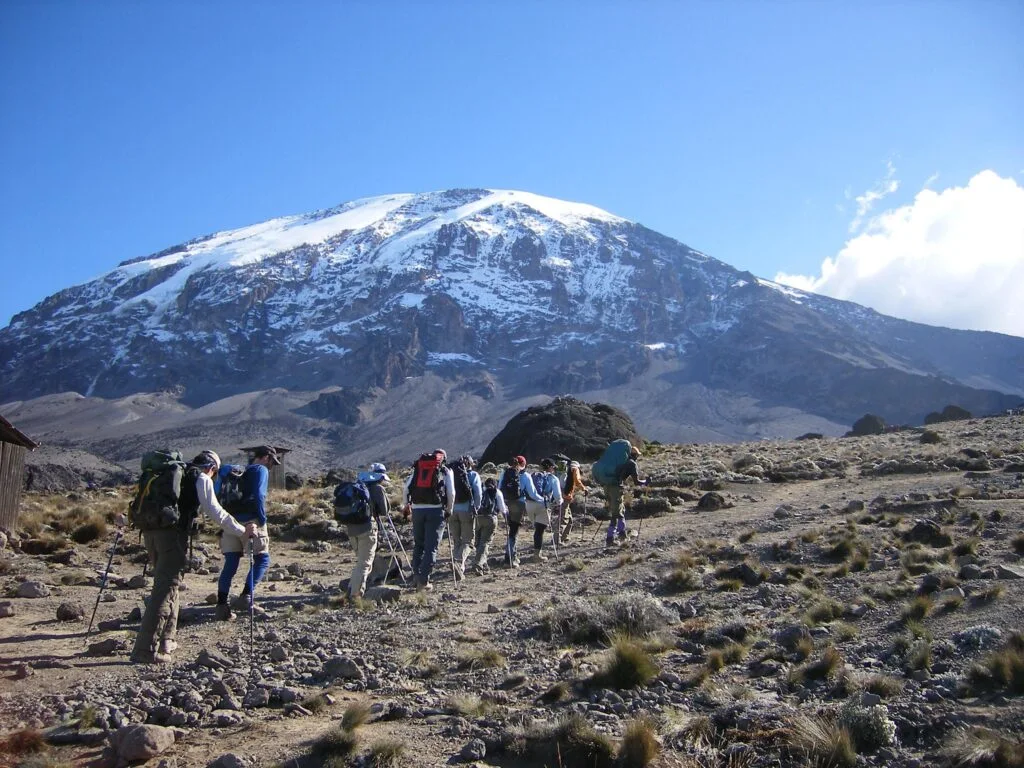
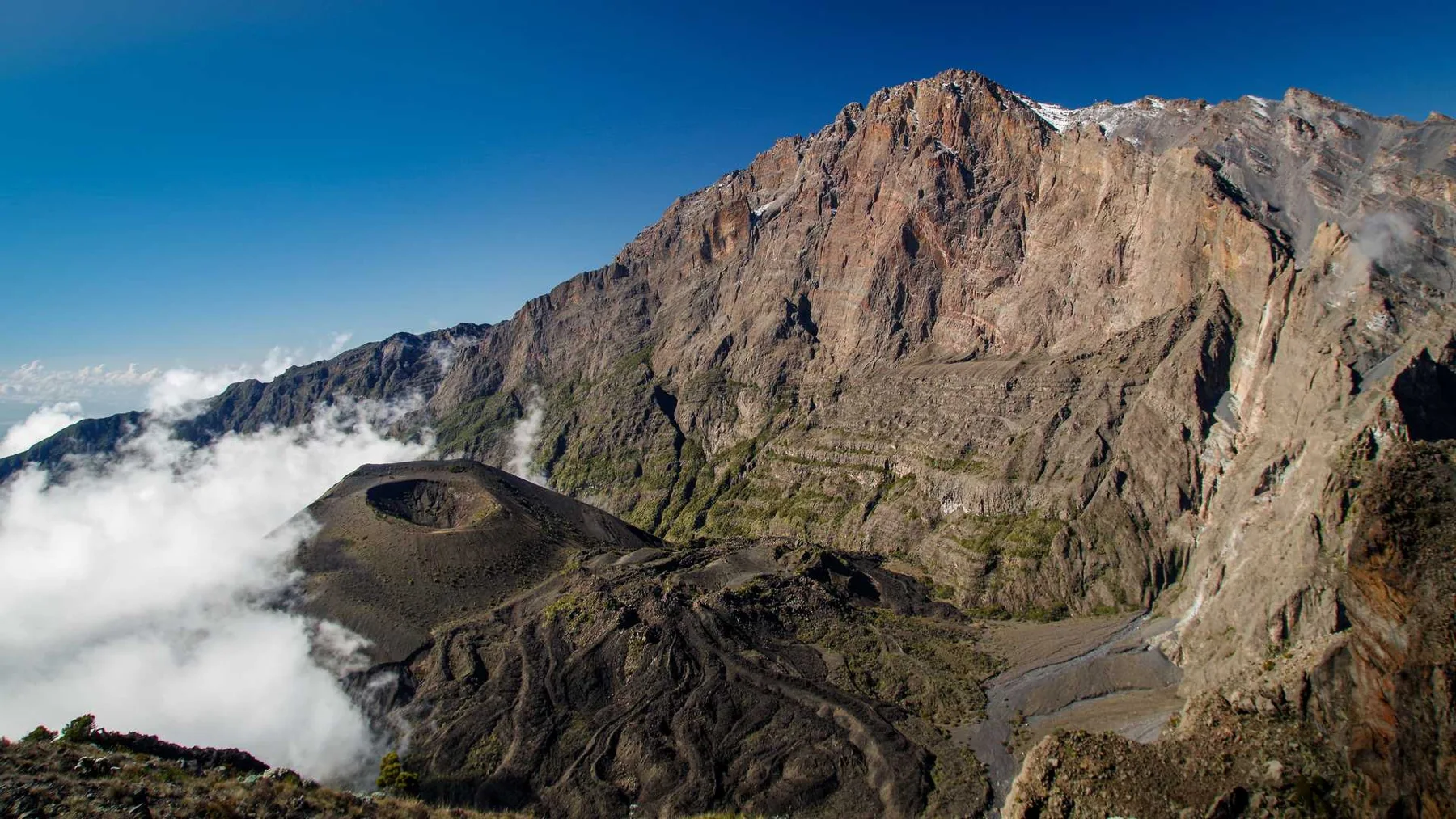
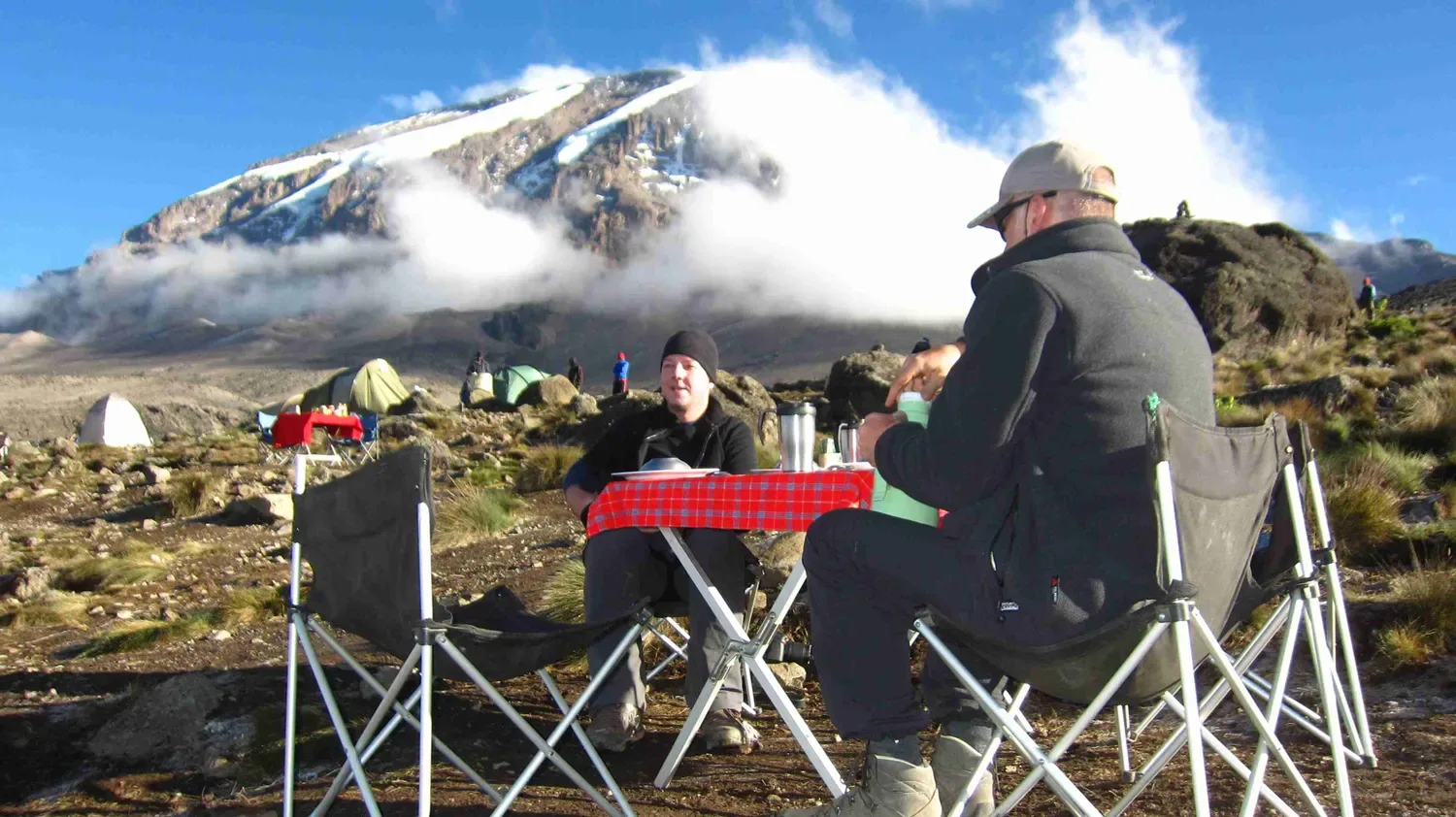
The Machame route is Kilimanjaro's most celebrated climb for a reason: it traverses the mountain's most dramatic scenery — rainforest, the Shira plateau, the Lava Tower, the Great Barranco Wall — and its 'climb high, sleep low' profile is tailor-made for acclimatisation. On seven days rather than six, you add a gentle day between Barranco and Barafu, and your summit chances rise significantly.
You'll climb with a fully supported crew: KINAPA-licensed guides trained in altitude first aid, twice-daily health checks with a pulse oximeter, emergency oxygen carried throughout, and porters who are properly paid, fed and equipped — because how a company treats its crew tells you everything about how it will treat you.
- Kilimanjaro's most scenic route
- Extra day = significantly better summit odds
- Climb high, sleep low acclimatisation profile
- Twice-daily health checks & emergency oxygen
- Fair, ethical porter treatment
- Sunrise summit from Stella Point to Uhuru Peak
Your journey, day by day.
Day 1 — Machame Gate (1,800 m) → Machame Camp (3,010 m)
After registration at Machame Gate, climb steadily through dense montane rainforest — home to colobus monkeys and turacos — emerging at Machame Camp on the edge of the moorland zone as the clouds sink below you.
Meals: Lunch · Dinner | Overnight: Machame Camp, 3,010 m
Day 2 — Machame Camp → Shira 2 Camp (3,845 m)
A steeper day up the ridge and onto the Shira Plateau, the remains of Kilimanjaro's oldest collapsed crater. Giant heathers give way to open moorland with your first big views of Kibo's glaciers.
Meals: Breakfast · Lunch · Dinner | Overnight: Shira 2 Camp, 3,845 m
Day 3 — Shira → Lava Tower (4,630 m) → Barranco Camp (3,960 m)
The classic 'climb high, sleep low' day: ascend to the 300-foot Lava Tower for lunch at 4,630 m — where you'll feel the altitude — then descend into the spectacular Barranco Valley among giant groundsels, sleeping 700 m lower than your high point.
Meals: Breakfast · Lunch · Dinner | Overnight: Barranco Camp, 3,960 m
Day 4 — Barranco Camp → Karanga Camp (4,035 m)
Start with the famous Barranco Wall — a fun, hands-on scramble that looks harder than it is — then roll across ridges and valleys to Karanga Camp. The extra night here is what makes the 7-day version so much more successful than the 6-day.
Meals: Breakfast · Lunch · Dinner | Overnight: Karanga Camp, 4,035 m
Day 5 — Karanga Camp → Barafu Camp (4,673 m)
A short morning to Barafu, your summit base camp on a rocky ridge. Early dinner, gear check, and to bed by early evening — the wake-up call comes before midnight.
Meals: Breakfast · Lunch · Early Dinner | Overnight: Barafu Camp, 4,673 m
Day 6 — Summit Night: Uhuru Peak (5,895 m) → Mweka Camp (3,100 m)
Setting off around midnight by headlamp, climb slowly ('pole pole') through the night to reach Stella Point on the crater rim for sunrise, then along the rim to Uhuru Peak — the highest point in Africa. Photos, tears, and a long glorious descent past Barafu to Mweka Camp in the forest.
Meals: Breakfast · Lunch · Dinner | Overnight: Mweka Camp, 3,100 m
Day 7 — Mweka Camp → Mweka Gate (1,640 m) → Moshi
A final morning down through the rainforest to Mweka Gate, where your summit certificates are issued and the crew sings you out. Transfer back to Moshi for the best shower of your life — or onward to a safari or Zanzibar.
Meals: Breakfast · Lunch | Drop-off: Moshi hotel
Included & not included
✓ Included
- Kilimanjaro National Park entry, camping & rescue fees
- Professional KINAPA-licensed mountain guides
- Porters, cook & full mountain crew — fairly paid
- Quality mountain tents, sleeping mats & dining tent
- All meals on the mountain & treated drinking water
- Pulse oximeter checks twice daily & emergency oxygen
- Transfers between Moshi/Arusha and the park gates
- Government taxes, VAT & 24/7 base support on WhatsApp
✕ Not Included
- International flights & visas
- Travel insurance (required)
- Tips for guide & crew
- Alcoholic & soft drinks (unless listed)
- Items of a personal nature
- Optional activities (balloon safari, cultural visits)
Frequently asked questions
What is the success rate on the 7-day Machame route?
Industry-wide, 7-day Machame climbs see markedly higher summit rates than 6-day climbs — the extra acclimatisation day makes a real difference. Going slowly, hydrating well and being honest with your guide at the daily health checks matter more than raw fitness.
How fit do I need to be?
If you can comfortably hike for 5–6 hours on consecutive days, you can attempt Kilimanjaro. No technical climbing is involved. See our physical training guide for a preparation plan.
What about altitude sickness?
Our guides are trained in altitude first aid, check every climber twice daily with a pulse oximeter, and carry emergency oxygen. The itinerary's profile is designed to acclimatise you naturally — and if it's ever unsafe to continue, your guide will make that call. Read our altitude guide.
What gear do I need?
A full layering system, broken-in boots, and a warm sleeping bag are the essentials — most items can be rented in Moshi. Our complete Kilimanjaro gear list covers everything.
Can this safari be customised?
Yes — every trip we run can be tailored. Add days, change parks, upgrade accommodation, or combine it with a Kilimanjaro climb or a Zanzibar beach extension. Just tell us what you have in mind when you enquire.
How do I book and pay?
Enquire via the form or WhatsApp and we'll confirm availability and send a detailed quote. A deposit secures your dates, with the balance due before travel. We'll walk you through the secure payment options with your quote.
Do I need a visa and vaccinations?
Most nationalities can obtain a Tanzania eVisa online before travel. See our entry requirements guide and vaccination guide for full details.